
TimelyCare is an E&I Contract Partner
This Video Interview Highlights a Student Athlete that Needed Mental Health Resources after an Injury | UC-Berkeley Gymnast
After a student athletes traumatic injury, her brain took much longer to heal from my injury than my body, and that impacted the athletes mental health. Hear the story of a UC-Berkeley gymnast, how mental health needs went unmet, and how she is now the VP of Care Transformation at TimelyCare.
A student athlete at UC-Berkeley discusses needing support after an injury, reflecting back
A college freshman at UC-Berkeley, only 17 years old, Nassim Bickham discusses her personal experience of being injured as a freshman on the balance beam. In just seconds her gymnastics career came crashing down, literally. Nassim landed straight on her head, breaking T3 and T5 vertebrae in her spine as well as tearing a trapezius muscle. At just 17 years old, she was bedridden in a dorm room for 10 weeks. Academics, athletic performance, relationships, and societal pressure are complex enough without injury. This ordeal was not just physically challenging; it was a mental and emotional rollercoaster. In addition to struggling with the shock of a major injury, Nassim was only six weeks into her college experience, navigating new challenges like adjusting to a new school, team and coach while living away from my home and family. She felt unprepared, or even not aware of, how traumatic this injury would be on her mental health.
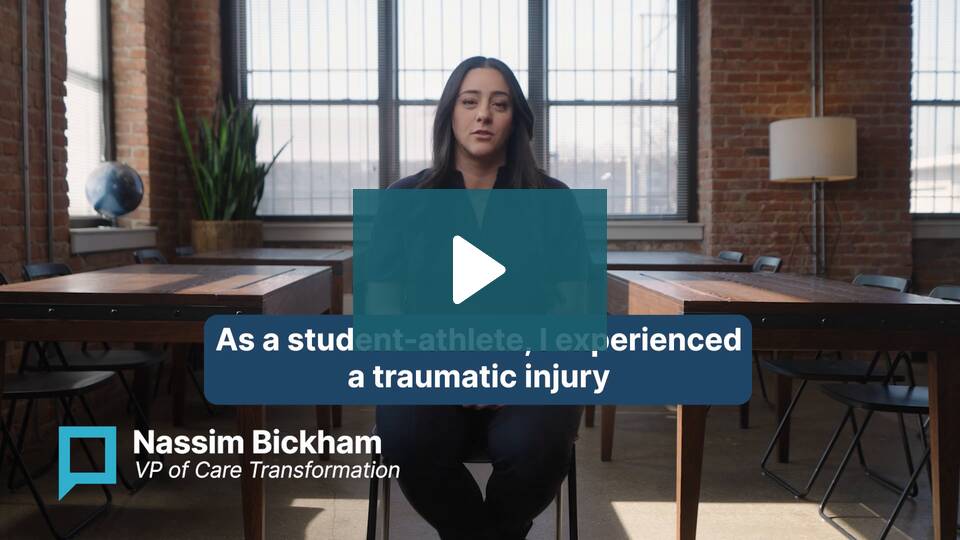
The reality is that Nassim's brain took much longer to heal from my injury than her body, and that impact on mental health went unmet, leading to retirement as a collegiate gymnast during her sophomore year. As an adult she looks back wondering if access to virtual health services could have connected her with a mental health professional right from her dorm room. That would have been an invaluable use of her bedridden time. Reflecting back, she notes that leaders in higher education and mental health must understand the mental health hurdles students face, the supportive role of institutional leaders, effective strategies in mental health care and the trends of reshaping how young athletes are nurtured. It’s time to help student-athletes achieve not just physical and academic success, but also emotional balance on their path forward. A recent study by Athletes for Hope found that only 10% of student-athletes experiencing mental health challenges seek professional support. Often, stigma and lack of access to proper care often prevent athletes from seeking help. And an NCAA-led survey found more than 80% of head, assistant and associate coaches across all three divisions are spending more time discussing mental health with student-athletes than they did before the pandemic.
How can virtual health support student-athletes?
An important step for higher ed to support student-athlete mental health is to lean into one of their most powerful assets: motivation. Student-athletes are among your most motivated individuals on campus. They know how to set goals and achieve them. While there may be an initial hurdle to breaking the stigma barrier, we know students want to feel better. Gen Z leads the charge for change though, a recent TimelyCare survey found that 73% of college students believe mental health support services would increase their likelihood of graduating. However, finding the time to seek mental health support is yet another challenge that can complicate a student athlete’s wellness journey, as their demanding academic, athletic and travel schedules can make it nearly impossible to schedule an in-person appointment when it suits their schedule. But virtual health resources can quickly connect students with a provider at their convenience.
TimelyCare offers these best practices to begin integrating mental health initiatives:
• Incorporate mental health experts into athletic departments
• Create mandatory education workshops
• Peer mental health programs
• Utilize technology for accessibility
• Integrated wellness checks
• Engaging nutrition and fitness with mental health
Virtual emotional and mental health care, such as the services provided by TimelyCare, can also help institutions meet the NCAA’s guidelines for mental health best practices by providing accessible, confidential, and secure support for student-athletes. Virtual care can remove barriers to mental health care, enabling student-athletes to reach their fullest potential in their academic and athletic performances.
This is just an executive summary. See the full article by TimelyCare here.

TimelyCare focuses its business on virtual health and well-being for higher education students. Since its founding, TimelyCare has grown to partner with more than 1.5 million students at 250 public and private colleges and universities across the country to provide high-quality care to institutions and university systems of varying sizes, locations, and student populations. More than 225 full-time employees and a diverse network of contract providers are located across the United States and include licensed professional counselors, licensed clinical social workers, licensed marriage and family therapists, licensed clinical psychologists, physicians, and nurse practitioners.